- Plot No. 361/3074 & Plot No 437/3134, Patrapada, BBSR
- +91 9040017001
- +91 8630400500
Essential Health Tests and Screenings for Smokers
Smoking can affect much more than the lungs. Tobacco use is associated with cardiovascular disease, respiratory disease, diabetes, and several types of cancer, and it can also affect oral health. Because some health problems may develop without obvious symptoms in the early stages, regular health monitoring can be an important part of preventive care for people who smoke or have smoked in the past.
However, there is no single “smoker health test” that checks for every possible effect of tobacco use. The right tests and screenings depend on factors such as age, smoking history, symptoms, family history, and overall health.
So, which health tests should smokers consider?
Why Regular Health Checks Matter for Smokers
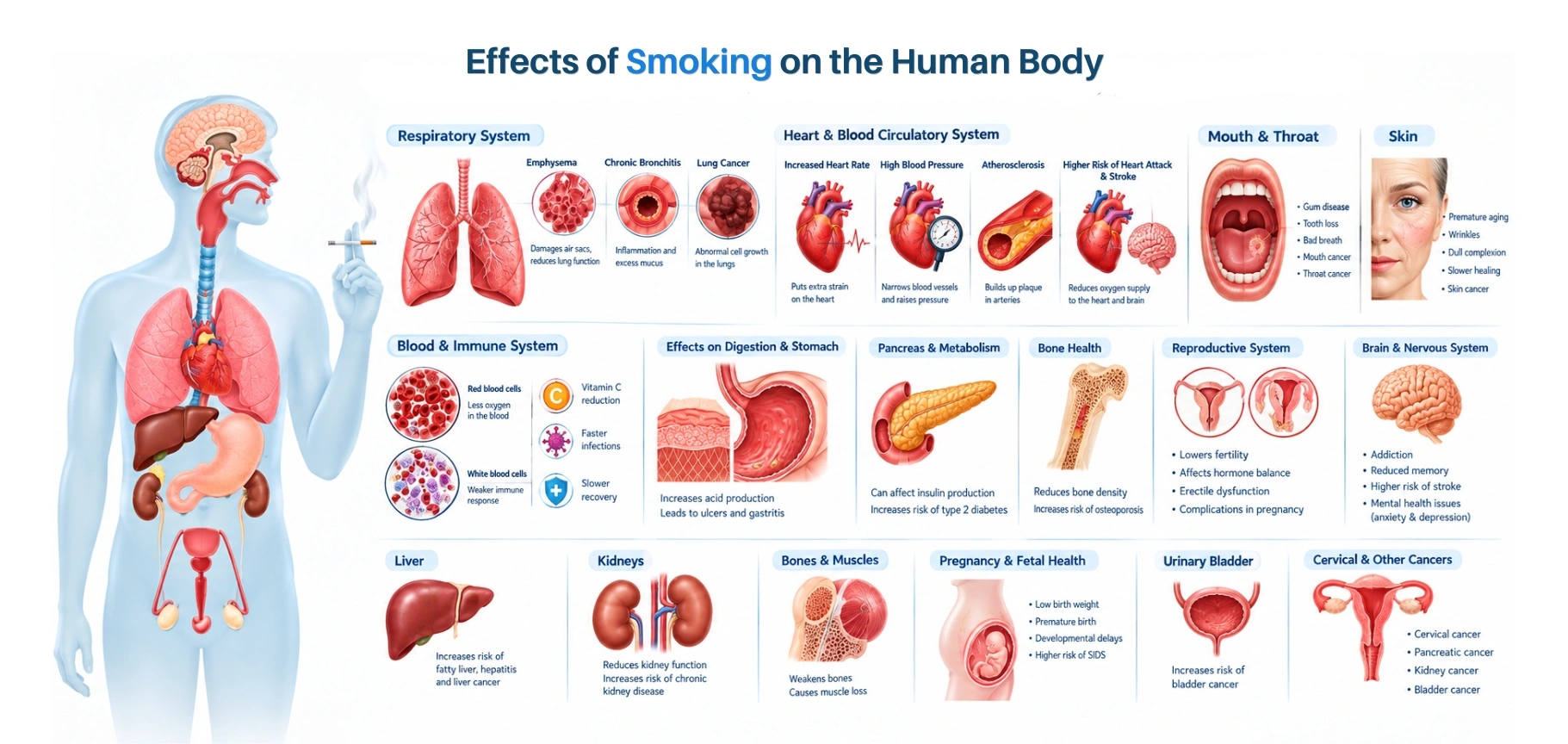
Smoking can influence several parts of the body:
- Lungs: it irritates the airways and can affect breathing over time.
- Heart and blood vessels: it is linked with higher cardiovascular risk.
- Mouth and throat: tobacco use is associated with gum and other oral health problems.
- Overall health: it can add to other risk factors such as blood pressure, cholesterol, and blood sugar.
Still, smoking alone does not set your screening schedule. Doctors also consider your age, whether you smoke now or have quit, how many years you smoked and how much, your general health, family history, symptoms, and other risk factors. Two people who smoke can have quite different needs.
Which Health Tests May Be Relevant for Smokers?
Some tests may be considered as part of routine health assessment, especially when a person has other risk factors.
・Blood Pressure and Cardiovascular Risk Assessment
Smoking is a major risk factor for cardiovascular disease and can contribute to changes in blood vessels and blood clotting. Regular blood pressure checks and assessment of cardiovascular risk can therefore be important.
Depending on individual risk, a doctor may also consider cholesterol levels, blood sugar, weight, and other factors that contribute to cardiovascular health.
・Blood Sugar Testing
Smoking is associated with an increased risk of type 2 diabetes. Blood glucose or HbA1c testing may be considered as part of routine health assessment when appropriate, particularly when other diabetes risk factors are present.
・Lipid Profile
A lipid profile measures blood fats such as cholesterol and triglycerides. Since cardiovascular risk is influenced by several factors, including smoking, lipid testing may be useful when assessing overall heart health. Here is a guide to the lipid profile test.
・Complete Blood Count
A Complete Blood Count (CBC) measures different components of blood, including red blood cells, white blood cells, and platelets. It may be included in a broader health assessment when clinically appropriate.
A CBC does not specifically diagnose the effects of smoking, but it can provide useful information about general health and certain blood-related conditions.
・Liver and Kidney Function Tests
Liver and kidney function tests may also be included in a broader health assessment depending on a person’s medical history, symptoms, medications, and other risk factors.
These tests should not be considered specific “smoking tests.” Rather, they can form part of an overall assessment when recommended by a healthcare professional.
Lung Health Screening: What Should Smokers Know?
Lung health deserves particular attention because smoking is the leading risk factor for lung cancer and is strongly associated with chronic respiratory disease.
But lung cancer screening is not recommended for every person who smokes.
For example, the U.S. Preventive Services Task Force recommends annual low-dose CT (LDCT) screening for adults aged 50 to 80 who have a 20 pack-year smoking history and currently smoke or quit within the previous 15 years.
The American Cancer Society also recommends annual LDCT screening for adults aged 50 to 80 with at least a 20 pack-year smoking history who currently smoke or previously smoked.
A pack-year describes cumulative smoking exposure. One pack-year is roughly equivalent to smoking one pack of cigarettes per day for one year. For example, smoking one pack per day for 20 years equals 20 pack-years.
Because screening recommendations can vary by guideline and population, smokers should discuss their individual eligibility with a healthcare professional rather than arranging a CT scan simply because they smoke.
What About Spirometry?
Spirometry measures how much air you can breathe out and how quickly, which helps assess lung function. It is used to investigate breathing symptoms or suspected lung disease. It is not a cancer screening test and cannot replace LDCT. A doctor can decide whether spirometry or another respiratory evaluation is appropriate.
Other Health Screenings Smokers Should Not Overlook
- Oral health: regular dental and oral examinations are useful, since tobacco use is associated with oral health problems.
- Cardiovascular health: blood pressure, cholesterol, blood sugar, and weight can be monitored according to your individual risk.
- Respiratory symptoms: a persistent cough, wheezing, breathlessness, coughing up blood, chest discomfort, or unexplained changes in breathing need medical evaluation. A routine health package is not the right route for these.
Routine Monitoring vs Risk-Based Screening vs Diagnostic Testing
It is useful to understand that these are not the same thing.
- Routine health monitoring may include blood pressure, blood sugar, cholesterol, and general blood tests when appropriate.
- Risk-based screening is offered to people who meet specific criteria. Lung cancer screening with LDCT is one example.
- Diagnostic testing is used when a person has symptoms or a clinical concern. For example, someone with persistent breathing problems may need respiratory evaluation or spirometry.
This distinction matters because having a smoking history does not automatically mean that every test is necessary.
When Should a Smoker See a Doctor?
Do not wait for a routine health checkup if you develop concerning symptoms.
Medical evaluation is particularly important for symptoms such as:
- A persistent or worsening cough
- Coughing up blood
- Unexplained shortness of breath
- Chest pain
- Persistent hoarseness
- Unexplained weight loss
- Recurrent respiratory infections
- Significant changes in your usual breathing
These symptoms can have many possible causes and do not automatically mean that someone has cancer or another serious disease. However, they should be assessed by a qualified healthcare professional.
Can a Health Checkup Help Smokers Monitor Their Health?
Yes. A preventive health checkup can help monitor important health parameters such as blood sugar, lipid profile, blood counts, and liver and kidney function, depending on your age, medical history, and risk factors. It does not replace medical consultation or specific screening when needed.
For preventive health checkups and diagnostic testing in Bhubaneswar, Prolife Diagnostics offers laboratory tests, imaging, cardiac diagnostics, and health checkup services based on individual needs.
Why Choose Prolife Diagnostics Centre for Your Health Tests?
When you need routine blood tests, preventive health checkups, or diagnostic investigations, choosing a centre that offers a range of testing services can make the process more convenient.
Prolife Diagnostics Centre provides a range of diagnostic services in Bhubaneswar, including:
- Routine and specialized laboratory tests
- Preventive health checkup packages
- Blood sugar and lipid profile testing
- Liver and kidney function tests
- Imaging services such as CT scans, MRI, and ultrasound
- Cardiac diagnostic services
The right tests depend on your health history, symptoms, age, and individual risk factors. Prolife Diagnostics can support your diagnostic testing needs while helping you access the investigations recommended by your healthcare professional.
Health testing and preventive checkups at Prolife Diagnostics
Our diagnostic services include blood testing through clinical biochemistry and hematology, digital X-ray, CT scan services, and health checkup packages. These services can support general health monitoring or an investigation advised by your doctor. Which test suits you, including whether a low-dose or standard scan is appropriate, is a decision for your doctor.