- Plot No. 361/3074 & Plot No 437/3134, Patrapada, BBSR
- +91 9040017001
- +91 8630400500

When Should You Get a Spine MRI?
A backache that keeps returning, neck pain that spreads into your shoulder, or tingling in your hands or legs can leave you wondering: When should you get a Spine MRI?
A Spine MRI may be recommended when symptoms persist, worsen, or suggest a problem involving the spinal discs, nerves, or spinal cord. It produces detailed images of these structures and helps doctors investigate possible causes of pain, numbness, or weakness.
However, not every episode of back or neck pain requires an MRI. The decision depends on your symptoms, medical history, physical examination, and whether the scan is likely to help guide treatment.
If you have ongoing symptoms, a doctor can assess whether a Spine MRI is appropriate and which part of the spine to examine.
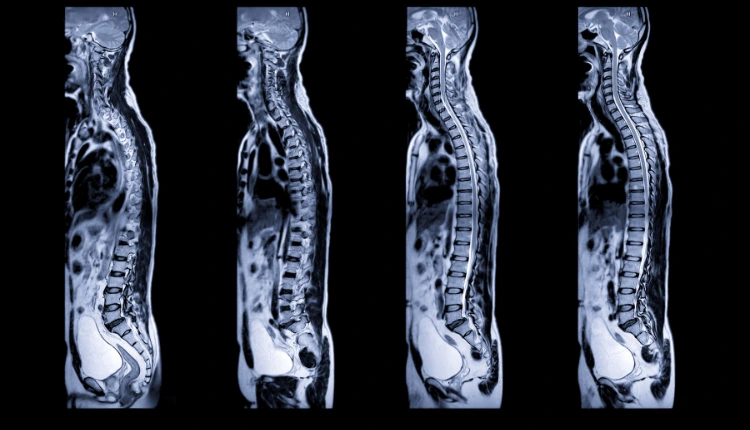
What Is a Spine MRI and What Does It Show?
MRI stands for Magnetic Resonance Imaging. A Spine MRI uses magnetic fields and radio waves to create detailed images of the spine and surrounding soft tissues. Unlike X-rays and CT scans, MRI does not use ionising radiation.
When Should You Consider Getting a Spine MRI?
A Spine MRI may be considered when a doctor needs a closer look at the spinal structures to understand persistent or concerning symptoms.
Some situations in which it may be recommended include:
1. Back or neck pain that does not improve
Pain that continues despite appropriate initial care may need further evaluation. If the doctor suspects a problem involving a disc, nerve, or other spinal structure, an MRI may help investigate the cause.
2. Pain that spreads into an arm or leg
Pain travelling from the neck into the shoulder or arm, or from the lower back into the buttock or leg, may sometimes be associated with nerve irritation or compression. An MRI can help assess the affected spinal region.
3. Persistent numbness or tingling
Ongoing pins-and-needles sensations or reduced sensation in the arms, hands, legs, or feet may warrant medical assessment. A doctor may recommend MRI if a spinal nerve problem is suspected.
4. Muscle weakness
New or worsening weakness in an arm or leg needs prompt medical evaluation. MRI may be used to investigate possible pressure on a nerve or the spinal cord.
5. Suspected spinal infection or tumour
When symptoms, examination findings, or medical history raise concern about an infection or tumour involving the spine, MRI may help doctors assess the affected area.
6. Symptoms after spinal surgery or an injury
An MRI may be considered when new or worsening symptoms develop after spinal surgery. It may also be useful after certain injuries, depending on the type of trauma and the doctor’s assessment.
These situations do not automatically mean you need a Spine MRI. A healthcare professional will decide whether imaging is appropriate and which examination is most useful.
What Conditions Can a Spine MRI Help Detect?
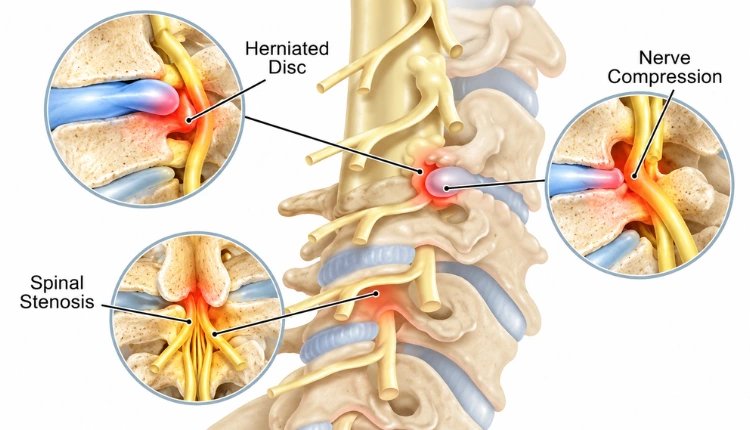
A Spine MRI can help investigate several conditions affecting the spinal discs, nerves, spinal cord, and surrounding tissues.
Some examples include:
- Herniated or slipped disc: When part of a spinal disc bulges or protrudes and may press on a nearby nerve.
- Nerve compression: Pressure on a spinal nerve that may cause pain, tingling, numbness, or weakness.
- Degenerative disc changes: Changes in the spinal discs that can occur with ageing and wear.
- Spinal stenosis: Narrowing of the spinal canal or the spaces through which nerves pass.
- Spinal cord abnormalities or injuries: Changes affecting the spinal cord that may require further investigation.
- Spinal infections: Certain infections involving the bones, discs, or nearby tissues.
- Spinal tumours: Abnormal growths involving the spine or surrounding structures.
A scan can provide useful information, but an MRI finding does not always explain a person’s symptoms. For example, some people may have disc changes without experiencing pain. Doctors interpret the images alongside the patient’s symptoms and examination findings.
You can also read about other conditions an MRI can detect to understand the wider diagnostic uses of MRI.
Do You Need an MRI for Every Episode of Back Pain?
No. Most uncomplicated episodes of back pain do not require immediate imaging.
Back pain can occur due to muscle strain, posture-related discomfort, physical activity, or other common causes. Many cases improve with time and appropriate initial management.
A doctor may not recommend an MRI straight away when there are no concerning symptoms or examination findings. Imaging may be considered if the pain does not improve, keeps returning, or is accompanied by symptoms suggesting nerve involvement.
An MRI may also be recommended earlier if the doctor suspects a serious underlying condition, such as an infection, tumour, significant injury, or spinal cord compression.
The important point is that the need for imaging depends on the clinical situation, not simply how long someone has experienced back pain.
Spine MRI vs X-Ray vs CT Scan: What Is the Difference?
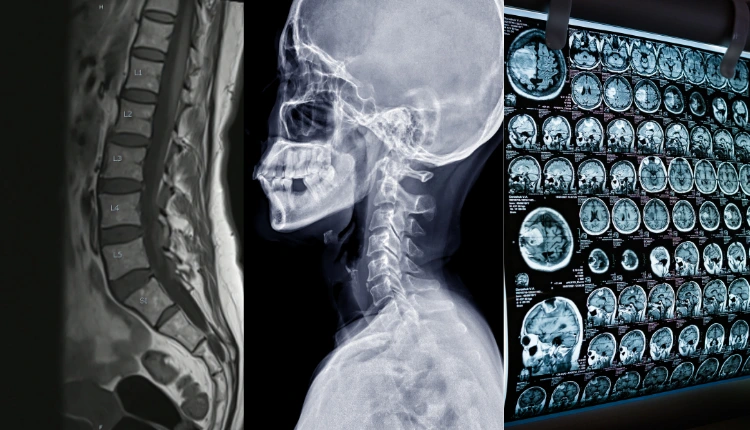
MRI, X-ray, and CT scans are different imaging methods. Each is useful for answering particular medical questions.
| Imaging test | What it helps examine |
| Spine MRI | Spinal discs, nerves, spinal cord, ligaments, and other soft tissues. |
| X-ray | Bone alignment, certain fractures, and structural changes in the spine. |
| CT scan | Detailed cross-sectional images, particularly useful for evaluating bones and selected injuries. |
A Spine MRI is often useful when the doctor needs detailed information about soft tissues or possible nerve compression. An X-ray may be sufficient when the main concern involves bone alignment or certain structural changes. A CT scan may be preferred in selected situations, including some injuries or when MRI is unsuitable.
No single imaging test is best for every condition. The appropriate examination depends on the suspected problem, urgency, and individual medical factors.
For more information, read our guide on when a CT scan may be needed.
When Is Back Pain a Medical Emergency?
Some symptoms associated with back pain require urgent medical attention. Do not wait for a routine scan appointment if you experience:
- New difficulty controlling your bladder or bowel.
- New numbness around the groin, genitals, or inner thighs.
- Rapidly worsening leg weakness or significant difficulty walking.
- Severe back pain following a major injury or accident.
- Back pain accompanied by fever, particularly when an infection is a concern.

These symptoms may indicate a serious problem involving the spinal cord, nerves, or other structures. Seek urgent medical evaluation rather than trying to arrange an MRI independently.
How Should You Prepare for a Spine MRI?
Preparation for a Spine MRI is usually straightforward, but it is important to follow the instructions provided by the imaging centre.
Before your scan:
- Inform the MRI team about implants or medical devices: Mention pacemakers, implants, metal fragments, surgical clips, or any previous surgery. Some devices require specific safety checks before an MRI.
- Mention if you may be pregnant: Let the staff know so they can consider the appropriate imaging approach.
- Follow clothing and jewellery instructions: You may be asked to change into a gown and remove jewellery, watches, or other metal objects.
- Tell the team if you feel claustrophobic: If you are uncomfortable in enclosed spaces or find it difficult to remain still, inform the staff beforehand.
- Ask whether contrast is required: Some MRI examinations use a contrast agent to provide additional information, but many Spine MRI scans do not require it.
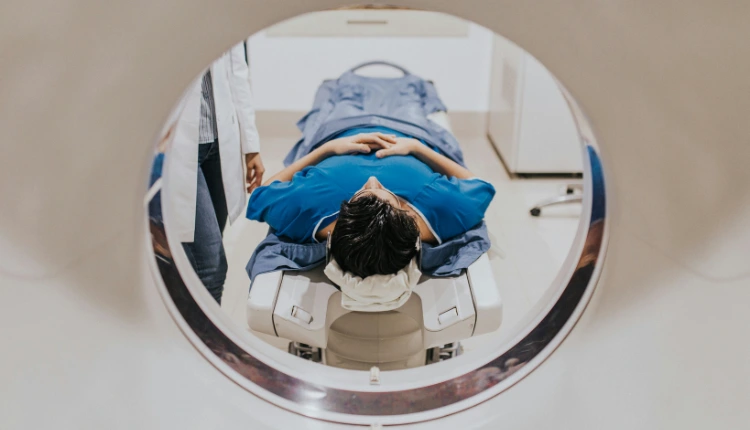
For more information about the examination, its uses, and safety considerations, refer to RadiologyInfo.org’s guide to Spine MRI, a patient resource reviewed by the American College of Radiology and the Radiological Society of North America.
Where Can You Get a Spine MRI in Bhubaneswar?
If your doctor has recommended spinal imaging, choosing a diagnostic centre that offers the required MRI examination is an important next step.
Prolife Diagnostics in Bhubaneswar provides MRI services, with information on examinations covering different regions of the spine, including cervical, thoracic, dorsal, and lumbar spine MRI. Confirm the availability of the specific examination you need before visiting.
You can explore the MRI scan in Bhubaneswar service page or learn more about the centre’s diagnostic services in Bhubaneswar.
For appointment and scan-related enquiries, contact:
- Prolife Diagnostics
- AIIMS Nagar, Plot No. 361/3074, Patrapada, Bhubaneswar, Odisha
Discuss your symptoms and scan recommendation with your doctor before booking. The doctor can help identify which part of the spine needs imaging and whether an MRI is the appropriate test.