- Plot No. 361/3074 & Plot No 437/3134, Patrapada, BBSR
- +91 9040017001
- +91 8630400500

Dehydration Symptoms & Best Tests to Check Electrolyte Levels
You reach for a glass of water at the end of a long day – but by then, your body may have already been silently struggling for hours. Dehydration is one of those conditions that sneaks up on you. It is not always a parched throat or cracked lips. Sometimes it is a dull headache, a wave of dizziness, or a sudden drop in energy that makes you wonder what went wrong.
At Prolife Diagnostics Centre , we see this regularly – patients who come in with vague, uncomfortable symptoms that have been dismissed as “just tiredness” or “the weather,” only to discover that their electrolyte balance is significantly off. The good news is that dehydration and electrolyte imbalances are measurable, manageable, and entirely preventable when detected early.
This blog is your complete guide – written in plain language by our clinical team – to understanding what dehydration really means, which symptoms deserve your attention, and which laboratory tests give you the most accurate picture of your body’s hydration and electrolyte status.
What Dehydration Actually Does to Your Body
Dehydration isn’t just about losing water. It’s about losing the right balance of water and electrolytes – minerals like sodium, potassium, magnesium, chloride, and calcium that carry electrical charges and keep your body’s systems working in sync.
These electrolytes regulate:
- Nerve and muscle function (including your heart muscle)
- Fluid balance inside and outside your cells
- Blood pressure and pH levels
- Kidney filtration and urine output
When you sweat heavily, vomit, have diarrhea, don’t drink enough fluids, or take certain medications (like diuretics), these minerals get depleted. And here’s what most people don’t realize: you can be significantly dehydrated without feeling extremely thirsty – especially older adults, people with diabetes, and those on blood pressure medications.
Dehydration Symptoms: Beyond Just Feeling Thirsty
Thirst is actually a late signal. By the time you feel thirsty, your body has already lost approximately 1-2% of its water volume. The earlier, subtler symptoms are the ones most often attributed to other causes.
Here is how dehydration and electrolyte imbalance present across different levels of severity:
Mild to Moderate Dehydration
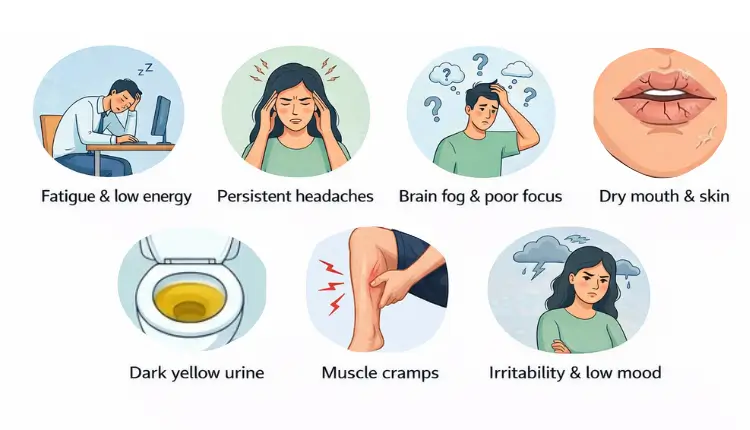
- Fatigue or low energy despite adequate sleep
- Dull, tension-type headache that worsens through the day
- Reduced concentration, brain fog, and difficulty with short-term memory
- Dry mouth, lips, and skin with reduced skin elasticity
- Dark yellow urine and decreased urinary frequency
- Mild muscle cramps, particularly in the legs
- Irritability and low mood without clear psychological cause
Severe Dehydration – Seek Medical Attention Immediately
- Rapid heartbeat and palpitations as blood volume drops
- Dizziness or light-headedness on standing (postural hypotension)
- Significant muscle weakness and cramping
- Nausea and in some cases vomiting
- Sunken eyes and markedly reduced skin turgor
- Confusion and impaired cognitive function
- Very dark urine or absence of urination
| When to Seek Immediate Medical Attention |
Severe dehydration (above 10% fluid loss) is a medical emergency. Seek care without delay if you or someone near you experiences:
● Extreme confusion, disorientation, or loss of consciousness
● No urination for more than 8 hours
● Rapid breathing combined with rapid heartbeat
● Severe vomiting or diarrhoea lasting more than 24 hours
● Chest pain or seizures
Who Is Most at Risk?
While dehydration can affect anyone, certain groups are significantly more vulnerable:
These groups should monitor hydration status and electrolyte levels proactively:
|
The Best Diagnostic Tests to Check Electrolyte Levels
Recognising dehydration symptoms is important, but symptoms alone cannot tell you which electrolytes are depleted, by how much, or what the downstream impact has been on your kidneys and other organs. That is what laboratory testing is for.
Here are the most clinically relevant tests – ordered by diagnostic priority:
1. Serum Electrolytes Panel
This is the cornerstone test for evaluating electrolyte status. It measures sodium (Na⁺), potassium (K⁺), chloride (Cl⁻), and bicarbonate (HCO₃⁻) levels in your blood. Sodium is the primary regulator of fluid balance, while potassium is essential for heart and muscle function. An imbalance in any of these can cause symptoms ranging from mild weakness to life-threatening cardiac arrhythmias.
What it detects: Hyponatraemia (low sodium), hyperkalaemia (high potassium), acid-base imbalances, and overall fluid distribution disorders.
2. Kidney Function Test (KFT) / (RFT)
The kidneys are the primary regulators of electrolyte balance. When dehydration persists, the kidneys concentrate urine and activate hormonal mechanisms to retain sodium and water – processes that, under sustained stress, lead to structural damage. kidney function test
measures creatinine, blood urea, uric acid, and eGFR to assess how well the kidneys are handling this load.
For anyone with diabetes or hypertension – two conditions that accelerate kidney stress during dehydration – understanding the link between kidney tests for diabetes and hydration is particularly important.
3. Complete Blood Count (CBC)
Dehydration causes the blood to become more concentrated – a condition called haemoconcentration. A CBC measures haematocrit and haemoglobin levels, which rise when blood volume is reduced. This test also screens for infections or anaemia that may be compounding fatigue and weakness symptoms. Explore common diseases detected via CBC test to understand how much this single test can reveal.
4. Urine Specific Gravity and Osmolality
One of the simplest yet most informative tests. Urine colour, concentration, specific gravity, and the presence of ketones all indicate hydration status. A high urine specific gravity (above 1.020) suggests the kidneys are working to conserve water – a clear sign of dehydration. This test can often provide immediate, actionable results.
5. Liver Function Test (LFT)
Chronic dehydration and persistent electrolyte disturbances place stress on both the kidneys and liver. LFT results – particularly albumin (a protein that regulates oncotic pressure and fluid distribution) and liver enzyme levels – provide important context when dehydration is prolonged or recurrent. Tracking liver and kidney function tests together gives the most complete view of systemic hydration-related organ health.
6. Blood Glucose and HbA1c
Elevated blood glucose is both a cause and a consequence of dehydration. High glucose increases blood osmolality, drawing water out of cells and triggering osmotic diuresis – the kidneys produce more urine to excrete excess glucose, which accelerates fluid and electrolyte loss. For patients with diabetes or pre-diabetes, glucose testing belongs alongside every electrolyte panel.
7. Arterial Blood Gas (ABG) – In Clinical Settings
When electrolyte disturbance is severe or the cause is unclear, ABG analysis measures blood pH, oxygen and carbon dioxide levels, and bicarbonate concentration – giving a precise picture of acid-base balance. This test is typically ordered in hospital or emergency settings where the clinical picture suggests significant metabolic derangement.
Electrolyte Test Reference: What Is Measured and Why
| Test | Electrolyte / Marker | Clinical Significance |
| Serum Electrolytes | Na, K, Cl, Mg, Ca, HCO3 | Core electrolyte concentrations – primary dehydration screen |
| Kidney Function Test (KFT) | Creatinine, Urea, eGFR | Kidney stress from sustained dehydration |
| CBC | Haematocrit, Haemoglobin | Haemoconcentration – detects relative red cell elevation |
| Urine Osmolality / SG | Urine concentration | Direct measure of kidney’s water-conserving response |
| Liver Function Test (LFT) | Albumin, ALT, AST | Oncotic pressure and organ stress from chronic dehydration |
| Blood Glucose / HbA1c | Glucose, HbA1c | Glucose-driven osmotic dehydration and fluid loss |
| Arterial Blood Gas (ABG) | pH, HCO3, pCO2 | Acid-base balance in severe or prolonged electrolyte imbalance |
Why Choose Prolife Diagnostics for Your Electrolyte Testing?
When you are experiencing symptoms of dehydration or electrolyte imbalance, the accuracy of your test results matters enormously. A misread sodium level or an inaccurately processed creatinine value can lead to the wrong clinical decision, which is precisely why choosing a trusted laboratory is not a minor consideration.
At Prolife Diagnostics Centre, Bhubaneswar, our electrolyte panels and metabolic testing are processed on precision-grade analytical platforms with rigorous quality controls at every stage. Our team of experienced laboratory professionals ensures that every result you receive is one your doctor can act on with confidence.
What makes us the right choice for your diagnostic needs:
- Accurate Reports – zero compromise on analytical precision across all biochemical panel
- Timely Reports – same-day results for standard electrolyte, kidney, and liver function panels
- Advanced Technology – automated biochemistry analysers with international quality benchmarks
- 10+ Years of Experience with a team trained in some of Odisha’s most respected clinical institutions
- Affordable, Transparent Pricing – comprehensive metabolic panels accessible to every patient
- Located near AIIMS Bhubaneswar – easily accessible for patients across the city and region
We are established by senior medical professionals who have worked in some of the most reputed hospitals in Odisha and beyond. That experience translates directly into value-based, affordable, best-in-class diagnostic care for every patient who walks through our doors.
Simple Steps to Prevent Dehydration and Electrolyte Imbalance
While testing gives you clarity, prevention remains the best medicine. Our clinical team recommends:
- Drink at least 2.5-3 litres of water daily – more during summer months or physical exertion
- Include electrolyte-rich foods in your diet: bananas, coconut water, leafy greens, nuts, and dairy
- Avoid excessive caffeine and alcohol, both of which increase fluid loss
- Replace fluids proactively after exercise, not just when you feel thirsty
- Use ORS (Oral Rehydration Solution) during episodes of vomiting or diarrhoea
- Schedule a preventive electrolyte panel annually, especially if you are in a high-risk group
Conclusion:
At Prolife Diagnostics, we understand that visiting a diagnostic center can feel overwhelming – especially when you are already unwell. Our promise to you is simple: you will receive accurate information, delivered with compassion and respect, to help you and your family make the best healthcare decisions.
Dehydration is not a condition to self-diagnose and self-treat indefinitely. If your symptoms persist, if they are recurring, or if you belong to a high-risk group, please get tested. A simple electrolyte panel today could prevent a hospitalisation tomorrow.
Top Picks from This Blog:
👉 UTI Symptoms in Summer & Recommended Lab Tests
👉 Beat the Heat: Essential Summer Tips for Cancer Patients
👉 Why Kidney Function Tests Are Essential for People With Diabetes & Hypertension
👉 Signs Your Liver Might Be Under Stress (Even if You Feel Fine)
👉 Common Mistakes That Can Affect Your Blood Test Results
👉 Why Liver and Kidney Function Tests Are Becoming Essential Today