- Plot No. 361/3074 & Plot No 437/3134, Patrapada, BBSR
- +91 9040017001
- +91 8630400500

Health Tests for People With a Sedentary Lifestyle: What Should You Check?
Spending eight to ten hours sitting at a desk, attending online meetings, driving, or working from home can leave very little time for physical activity. Even if you feel healthy, spending most of your day sitting may contribute to health risks that are not always noticeable in the beginning.
Health tests for people with a sedentary lifestyle can help assess important health indicators, including blood sugar, cholesterol, liver function, and kidney function. However, not everyone needs the same tests. Your age, family history, symptoms, existing medical conditions, and daily habits all influence which tests may be appropriate.
If you spend most of your day sitting, understanding these tests can help you have a more informed conversation with your doctor about preventive healthcare.
How Can a Sedentary Lifestyle Affect Your Health?
A sedentary lifestyle generally involves spending much of your waking time sitting or reclining, with very little physical activity. Desk-based work, long commutes, and extended screen time can all contribute.
Over time, low physical activity may influence several aspects of health.
- Blood sugar regulation: Physical inactivity is associated with a higher risk of insulin resistance and type 2 diabetes, particularly when combined with other risk factors.
- Cholesterol and heart health: Low activity levels may contribute to an unfavourable cholesterol profile and increase cardiovascular risk.
- Weight and metabolic health: Spending long periods sitting, especially alongside an unbalanced diet, may contribute to weight gain and metabolic changes.
- Blood pressure: Physical inactivity is one of several lifestyle factors associated with high blood pressure.
- Musculoskeletal discomfort: Remaining in the same position for extended periods may contribute to back, neck, and shoulder discomfort.
These risks do not affect everyone in the same way. Age, genetics, diet, sleep, smoking, and existing health conditions also play important roles.
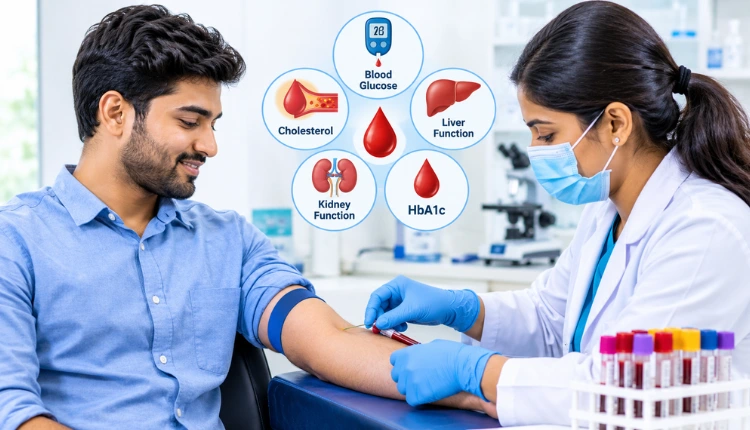
Essential Health Tests for People With a Sedentary Lifestyle
The tests below are the ones doctors commonly consider for inactive adults. For each, you will see what it checks and why it may matter. You are unlikely to need all nine at once.
1. Fasting Blood Glucose Test
A fasting blood glucose test measures the amount of glucose in your blood after you have not eaten for at least eight hours.
It helps assess how your body regulates blood sugar and may be recommended if you have risk factors for prediabetes or type 2 diabetes.
This test may be worth discussing with your doctor if you:
- Have a family history of diabetes.
- Are overweight or have increased abdominal fat.
- Have high blood pressure or abnormal cholesterol levels.
- Have previously recorded elevated blood glucose.
- Have other recognised diabetes risk factors.
An abnormal result does not automatically confirm a diagnosis. Your doctor may recommend repeat testing or another assessment, such as HbA1c.
2. HbA1c Test
The HbA1c test measures the percentage of haemoglobin in red blood cells that has glucose attached to it. It provides an estimate of your average blood sugar level over approximately the previous two to three months.
Unlike fasting blood glucose, this test does not generally require fasting.
Doctors may use HbA1c to help identify prediabetes and diabetes or monitor blood sugar control in people already diagnosed with diabetes.
3. Lipid Profile
A lipid profile measures different types of fats in your blood and helps assess cardiovascular risk.
It commonly includes:
- Total cholesterol: The overall amount of cholesterol in your blood.
- LDL cholesterol: Often called bad cholesterol because higher levels can contribute to plaque buildup in arteries.
- HDL cholesterol: Often called good cholesterol because it helps carry cholesterol away from the arteries.
- Triglycerides: A type of fat in the blood that can be influenced by diet, weight, and metabolic health.
Physical inactivity, an unbalanced diet, excess body weight, and family history may all influence cholesterol levels.
A doctor may recommend a lipid profile based on your age, cardiovascular risk factors, previous results, and medical history.
4. Liver Function Test (LFT)
A Liver Function Test evaluates different substances in your blood that provide information about liver health.
Depending on the panel, it may include markers such as ALT, AST, ALP, bilirubin, albumin, and other measurements.
Why might this matter to someone with a sedentary lifestyle?
Low physical activity combined with excess body weight, insulin resistance, or other metabolic risk factors may be associated with metabolic dysfunction-associated steatotic liver disease (MASLD), previously known as non-alcoholic fatty liver disease.
A doctor may recommend liver-related investigations when there are relevant risk factors, symptoms, or abnormal previous results.
An LFT alone cannot confirm or rule out fatty liver. Further evaluation, such as imaging, may be considered when clinically appropriate.
5. Kidney Function Test
Kidney function tests help assess how effectively your kidneys filter waste products from the blood.
Common measurements include:
- Serum creatinine: A waste product used to help evaluate kidney function.
- Estimated glomerular filtration rate (eGFR): An estimate of how efficiently the kidneys filter blood.
Doctors may recommend kidney function testing for people with diabetes, high blood pressure, a history of kidney disease, or other relevant risk factors.
A sedentary lifestyle by itself does not mean you automatically need this test. However, if physical inactivity occurs alongside metabolic conditions, your doctor may consider kidney assessment as part of your overall health evaluation.
6. Complete Blood Count (CBC)
A Complete Blood Count (CBC) measures hemoglobin, red blood cells, white blood cells, and platelets. It helps identify conditions such as anemia, which can cause tiredness that is easily blamed on a desk job.
To be clear, a CBC does not directly measure the effects of a sedentary lifestyle. Its value is in ruling out other reasons for fatigue and giving a general view of your health.
Why might a person with a desk-based job need a CBC?
If you experience persistent fatigue, weakness, dizziness, or unexplained changes in your energy levels, a doctor may recommend a CBC as part of the investigation.
However, CBC is not a direct test for the health effects of prolonged sitting. It is used to investigate specific symptoms and assess general blood health.
If you have ongoing symptoms, learn more about symptoms that should not be ignored.
7. Thyroid Function Test
Thyroid function tests help evaluate how well your thyroid gland is working.
A common initial test is Thyroid Stimulating Hormone (TSH). Depending on the result and clinical situation, a doctor may also recommend Free T4 or other thyroid tests.
Thyroid problems can sometimes cause symptoms such as:
- Persistent tiredness.
- Unexplained weight changes.
- Changes in energy levels.
- Sensitivity to cold or heat.
- Changes in heart rate.
These symptoms can have several possible causes. A sedentary lifestyle does not directly cause thyroid disease, and thyroid testing is generally considered when symptoms, examination findings, or medical history suggest a possible thyroid problem.
8. Blood Pressure and Body Measurements
Not every useful health assessment requires a blood sample. Basic measurements can also provide important information about your health.
Blood pressure: Helps identify high blood pressure, which may increase the risk of heart disease, stroke, and kidney problems.
Body Mass Index (BMI): Uses height and weight to estimate whether body weight falls within a particular range. It is a screening measure, not a complete assessment of body composition or health.
Waist circumference: Helps assess abdominal fat, which can be associated with an increased risk of metabolic and cardiovascular conditions.
These measurements can help your healthcare professional decide whether additional testing is appropriate.
9. ECG (Electrocardiogram), When Recommended
An ECG records the electrical activity of the heart using small sensors placed on the chest, arms, and legs. It is quick and painless.
A doctor may recommend one based on symptoms such as chest discomfort, palpitations, or breathlessness, or on medical history and cardiovascular risk, for example diabetes, high blood pressure, or a strong family history. It is not a routine requirement for every inactive adult.
Which Health Tests Should You Consider at Different Ages?
The table below is a general guide to what may be relevant, not a fixed package. The actual plan depends on your risk factors, symptoms, family history, and medical advice.
| Age group | Assessments that may be relevant | What can change the plan |
| 20s and 30s | Blood pressure, BMI and waist circumference. Blood sugar, lipid profile, or CBC if there is excess weight, family history, or symptoms. | Weight, family history of diabetes or heart disease, fatigue or other symptoms |
| 40s and 50s | Blood pressure, BMI and waist circumference, blood sugar, and lipid profile are often discussed. LFT and KFT when risk factors exist. ECG if symptoms or heart risk are present. | Blood pressure, cholesterol, diabetes risk, family history of heart disease |
| 60 and above | Blood pressure, blood sugar, lipid profile, KFT, and CBC are commonly considered. LFT, TSH, and ECG when symptoms or medical advice call for them. | Existing conditions, medicines, mobility, new or changing symptoms |
Age is only a starting point An active 55-year-old and an inactive 32-year-old with a strong family history may need very different plans. Use age as a conversation starter with your doctor, not as a rulebook. |
How Often Should People With a Sedentary Lifestyle Get a Health Check-Up?
There is no single schedule that suits everyone. Age, family history, weight, blood pressure, diabetes risk, and existing conditions all influence how often tests make sense.
Someone with normal results and no risk factors may need less frequent checks. Someone with borderline blood sugar or raised blood pressure may need follow-up sooner to see whether lifestyle changes are working.
The best approach is to ask a healthcare professional for a personalized schedule. Keep your earlier reports, too. Trends over time are often more informative than any single result, and a regular health check-up is most useful when you can compare it with the last one.
Signs That You Should Not Ignore
Do not wait for your next check-up if you notice any of the following:
- Persistent or unusual fatigue
- Unexplained weight gain or loss
- Increased thirst or frequent urination
- Breathlessness during routine activities
- Persistent swelling in the legs or feet
- Chest discomfort or palpitations
These symptoms can have many causes, so they need medical evaluation rather than self-diagnosis.
Seek urgent care Chest pain, severe breathlessness, or sudden neurological symptoms such as weakness on one side, facial drooping, confusion, or difficulty speaking need immediate medical attention. Go to the nearest emergency department. |
Adults over 30 may benefit from discussing appropriate preventive assessments, particularly when they also have lifestyle-related risk factors. Read more about regular health checkups after 30.
How Can You Reduce the Health Risks of Sitting for Long Hours?
Health tests can help identify certain risk factors, but they cannot replace regular movement and healthy daily habits. Small changes to your work routine can make it easier to stay active.
- Take movement breaks: Avoid remaining seated for several hours without a break. Stand up, stretch, or walk around periodically.
- Add walking to your routine: Walk regularly through the day, for example during phone calls or after meals.
- Make time for regular physical activity: The WHO recommends that adults aim for at least 150–300 minutes of moderate-intensity aerobic activity per week, or an equivalent amount of vigorous activity. Muscle-strengthening activities are also recommended on at least two days a week. Start gradually if you have been inactive.
- Pay attention to your meals: Include vegetables, fruits, whole grains, and suitable sources of protein. Avoid tobacco and limit alcohol.
- Maintain a consistent sleep routine: Adequate sleep supports overall health and can help you maintain better daily habits.
- Follow up on abnormal results: If a test shows an abnormality, discuss it with your doctor and follow the recommended next steps rather than relying on repeat testing alone.
Even small increases in daily movement can be a useful starting point. The goal is not simply to exercise after work, but also to reduce the amount of uninterrupted sitting throughout the day.

Where Can You Get Health Checkup Tests in Bhubaneswar?
If you are planning a preventive health assessment, choosing a diagnostic centre that offers the relevant tests can make the process more convenient.
Prolife Diagnostics in Bhubaneswar offers diagnostic services across clinical biochemistry and hematology, including tests commonly used to assess blood sugar, cholesterol, liver function, kidney function, and blood health.
You can explore the following services:
- Clinical biochemistry tests for blood glucose, HbA1c, lipid profile, and liver and kidney function assessments.
- Hematology testing for investigations such as Complete Blood Count.
- ECG test to assess the heart’s electrical activity and detect irregular heart rhythms.
- Diabetic screening tests for relevant blood sugar assessments. Check the current package inclusions before booking.
- Health checkup packages in Bhubaneswar for available preventive testing options.
You do not necessarily need a comprehensive package just because you have a sedentary lifestyle. Discuss your health concerns with a doctor and choose the tests that are appropriate for you.
For test-related enquiries, Contact: 9040017001 / 8630400500
Location: AIIMS Nagar, Plot No. 361/3074, Patrapada, Bhubaneswar, Odisha