- Plot No. 361/3074 & Plot No 437/3134, Patrapada, BBSR
- +91 9040017001
- +91 8630400500
Pre-Pregnancy Health Checkup: Essential Tests Before Conceiving
Deciding to start a family is one of the most beautiful journeys a couple can embark on together. But before that journey begins, your body deserves a careful, compassionate look – because the healthier you are before conception, the stronger the foundation you build for your baby’s life. If you are planning to conceive, a pre-pregnancy health checkup is one of the most important steps you can take, not just for your baby’s well-being, but for your own. Many conditions that can complicate pregnancy, from thyroid imbalance to nutritional deficiencies, show no visible symptoms at all. Catching and correcting these concerns before conception makes a profound difference to both mother and child.
At Prolife Diagnostics, Bhubaneswar, we support women at every step of this journey with accurate, compassionate, and timely diagnostic care. This guide walks you through everything you need to know about pre-pregnancy tests – what they are, why they matter, and when to take them.
Why Pre-Pregnancy Health Checkup Matters More Than You Think
Most women begin medical checkups only after a positive pregnancy test. But healthcare experts and gynaecologists widely recommend starting at least 3 to 6 months before you plan to conceive. Here’s why:
- Silent health issues like thyroid dysfunction, pre-diabetes, or anaemia often have no early symptoms – but can seriously affect fertility and fetal development.
- Nutritional deficiencies (iron, folic acid, Vitamin D) need weeks to correct – starting early gives your body time to heal.
- Genetic and infectious risks can be identified and managed before they affect the pregnancy.
- Mental preparedness improves significantly when you know your health is in order – reducing anxiety and creating a calmer conception environment.
Just as you would prepare your home before welcoming a new life, preparing your body is an act of love – for both yourself and your child. If you are wondering about the diagnostic tests recommended at different life stages, pre-pregnancy is one of the most critical windows.
Essential Pre-Pregnancy Tests Every Woman Should Know
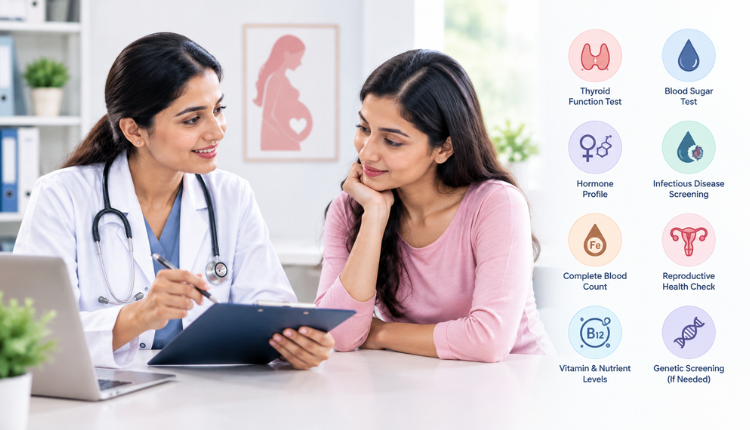
Here is a comprehensive look at the key tests that form the core of a pre-conception health checkup:
Complete Blood Count Test (CBC)
Evaluates haemoglobin levels, white blood cells, and platelets. Detects anaemia, infections, and blood disorders that can affect pregnancy outcomes.
Thyroid Function Test (TFT)
Measures TSH, T3, and T4 levels. Both hypothyroidism and hyperthyroidism can impair ovulation and lead to miscarriage if untreated before conception.
Blood Sugar (Fasting & HbA1c)
Identifies pre-diabetes or undiagnosed diabetes – a leading cause of complications such as gestational diabetes and birth defects. Understanding your HbA1c test is an important part of pre-pregnancy care.
TORCH Profile Test
Screens for Toxoplasma, Rubella, Cytomegalovirus (CMV), and Herpes – infections that can cause serious birth defects or miscarriage if contracted during pregnancy.
Hormonal Panel
Includes FSH, LH, AMH, oestrogen, and prolactin – critical for assessing ovarian reserve and hormonal balance, especially for women with irregular cycles or previous pregnancy losses.
Urine Routine & Culture
Detects urinary tract infections (UTIs) and early kidney concerns that could escalate into serious complications during pregnancy.
Lipid Profile
Assesses cholesterol and triglyceride levels. Uncontrolled lipid levels during pregnancy are linked to cardiovascular risk for both mother and baby.
Blood Group & Rh Factor
Knowing Rh compatibility between partners is vital. Rh incompatibility can cause haemolytic disease of the newborn – but is completely manageable when detected early.
Iron, Folic Acid & Vitamin D
Micronutrient deficiencies are extremely common in Indian women. Folic acid especially must be sufficient before conception to prevent neural tube defects.
Pap Smear & HPV Test
Cervical health screening ensures there are no abnormal cell changes or viral infections that could affect pregnancy or require treatment. Cervical cancer screening before conception is often overlooked but critically important.
Hepatitis B & C Screening
Hepatitis B can be transmitted from mother to child during birth. Detecting it before pregnancy enables preventive steps, including vaccination for your newborn immediately after delivery.
Pelvic Ultrasound / Sonography
Evaluates the uterus, ovaries, and fallopian tubes for fibroids, cysts, or structural abnormalities – all of which can impact conception and early pregnancy.
 Did You Know? Women with PCOS or PCOD often face unique hormonal challenges before pregnancy. If you have been diagnosed or suspect PCOS, knowing the right PCOS/PCOD diagnostic tests before conceiving can significantly improve your chances of a healthy pregnancy.
Additional Tests Based on Individual Risk Factors
Depending on your personal and family health history, your gynaecologist may recommend additional pre-pregnancy tests. These include:
Genetic Counselling and Carrier Testing
If you or your partner has a family history of genetic conditions such as thalassaemia, sickle cell anaemia, or Down Syndrome, genetic carrier screening is strongly advised. Early knowledge empowers informed decision-making and proactive management.
Kidney Function Tests (RFT)
Women with a history of high blood pressure, diabetes, or recurrent UTIs should assess kidney health before conceiving. Understanding your renal function test results helps you and your doctor take preventive action.
Liver Function Tests (LFT)
Liver health is often underestimated in pre-conception planning. Conditions like fatty liver can silently affect hormonal metabolism. If you notice fatigue, bloating, or digestive concerns, be aware of early signs of liver stress before they escalate.
Irregular Period Investigations
Women with a history of missed or highly irregular periods should get evaluated thoroughly. If you have been experiencing this, learningwhich diagnostic tests are recommended for irregular periods is a meaningful first step.
The Ideal Pre-Pregnancy Health Checkup Timeline
Timing your tests correctly maximises their usefulness. Here is a simple, doctor-recommended approach:
6 Months Before Conception
Begin lifestyle changes – diet, exercise, and supplements like folic acid. Initial consultation with your gynaecologist.
4-5 Months Before Conception
Complete core blood work: CBC, thyroid, blood sugar, hormonal panel, nutritional markers, and blood group.
3 Months Before Conception
Pelvic ultrasound, TORCH profile, cervical screening (Pap smear, HPV), and hepatitis B/C screening.
1-2 Months Before Conception
Follow-up tests based on earlier results. Review reports with your doctor and receive a personalised conception plan.
Proactive women who undergo full body health checkups before pregnancy are far better positioned to address any underlying concerns before they become complications.
What About Women with Specific Health Histories?
If you have experienced a previous miscarriage, a history of infertility, or have been diagnosed with a chronic condition like diabetes or thyroid disease, your pre-pregnancy evaluation needs to be more thorough. A comprehensive guide to prenatal health checkups can offer deeper insight into what your care journey may look like.
Women who have faced challenges with fertility are also encouraged to explore essential diagnostic tests for women’s health to ensure no underlying issue is left unaddressed before trying to conceive again.
The Emotional Side of Pre-Pregnancy Checkups
We understand that approaching these tests can feel overwhelming. What if something is not right? What if the results bring difficult news? These fears are entirely natural – and you are not alone in feeling them.
But here’s what the medical community knows with certainty: knowledge is always kinder than uncertainty. Finding an issue before pregnancy means you have time, options, and the full support of your healthcare team to address it. Most conditions detected during pre-pregnancy screening are highly treatable – especially when caught early.
At Prolife Diagnostics, we are not just running tests. We are standing beside you – with accurate results, clear reporting, and a compassionate team that understands what this journey means to you.
Final Thoughts
A pre-pregnancy health checkup is not about finding problems – it is about creating possibilities. It is about walking into one of life’s most significant chapters with clarity, confidence, and care. Every test you take is a quiet act of love for the family you are building.
Start early. Test thoroughly. And trust the process – with Prolife Diagnostics by your side every step of the way.